
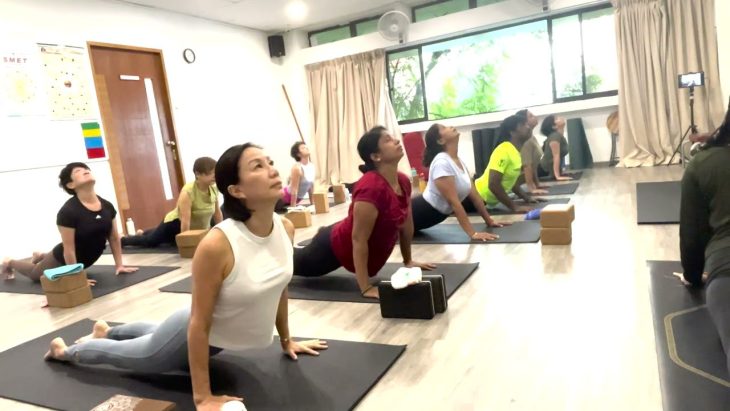
Why Functional Mobility, Not Stretching, Is Driving the Evolution of Yoga Classes in Singapore
In Singapore, conversations around movement and fitness are changing. More people are beginning to realise that simply stretching tight muscles does not resolve stiffness, discomfort, or recurring aches in the long term. Despite regular workouts or active lifestyles, many still experience restricted movement, joint discomfort, and a feeling that their body does not move as smoothly as it should. This shift in awareness is one of the reasons demand for yoga classes Singapore is evolving beyond flexibility-focused practice into something more intelligent and sustainable.
Functional mobility focuses on how the body moves as a connected system. It is about control, strength, coordination, and range of motion working together. This article explores why mobility has become a priority in Singapore, how yoga supports it more effectively than isolated stretching, and why modern yoga classes are increasingly designed around movement quality rather than depth.
The Problem With Stretching Alone
Stretching has long been promoted as the solution to tight muscles and poor posture. While it offers temporary relief, it often fails to address why stiffness develops in the first place.
Stretching typically:
-
Targets isolated muscles rather than movement patterns
-
Improves passive range without improving control
-
Does not address joint stability or coordination
In daily life, the body rarely moves in isolation. Walking, lifting, reaching, and sitting all involve multiple joints working together. When movement lacks coordination or strength within a range, the nervous system responds by creating tension as a protective mechanism.
This is why many people feel tight again shortly after stretching.
What Functional Mobility Really Means
Functional mobility refers to the ability to move joints through their full range with strength, control, and awareness. It is not about achieving extreme poses or forcing flexibility.
True mobility includes:
-
Active range of motion, not just passive stretch
-
Joint stability alongside movement freedom
-
Smooth transitions between positions
-
Balanced engagement of muscles and connective tissue
In Singapore’s desk-based work culture, mobility often declines due to repetitive positions, limited movement variety, and prolonged sitting. Over time, this leads to compensations that affect posture and comfort.
Why Singapore’s Lifestyle Accelerates Mobility Loss
Urban efficiency has a physical cost. Many daily habits contribute to reduced mobility without being immediately noticeable.
Prolonged Sitting
Long hours at desks shorten hip flexors, reduce spinal movement, and limit ankle mobility. These changes affect how the body distributes load during movement.
Repetitive Patterns
Daily routines often involve the same movements repeated with little variation. This limits joint exploration and reduces adaptability.
Limited Recovery
Busy schedules leave little time for restorative movement. Without recovery-focused activity, stiffness accumulates silently.
Over-Reliance on Machines
Gym equipment often supports the body through fixed paths, reducing the need for joint stabilisation and coordination.
Yoga offers a counterbalance by reintroducing varied, multi-directional movement in a controlled environment.
How Yoga Classes Support Functional Mobility
Modern yoga classes are increasingly designed to restore movement quality rather than chase flexibility milestones.
Emphasis on Joint-Centred Movement
Instead of pulling muscles into deeper positions, yoga encourages movement initiated from joints, supported by muscular engagement.
This approach:
-
Improves joint awareness
-
Enhances stability through range
-
Reduces reliance on passive flexibility
Controlled Transitions
Transitions between poses are as important as the poses themselves. Moving slowly between positions trains coordination and balance.
These transitions:
-
Strengthen connective tissue
-
Improve neuromuscular communication
-
Reduce injury risk during daily activities
Load Within Range
Yoga often involves bearing weight through different joints in varied positions. This builds strength at the edges of movement rather than only in comfortable ranges.
Over time, this increases confidence and resilience in movement.
The Role of Breath in Mobility Development
Breath plays a critical role in how the body moves. Shallow or restricted breathing increases tension and limits movement quality.
In yoga classes, breath is used to:
-
Reduce unnecessary muscle guarding
-
Improve rhythm and timing
-
Support smooth transitions
When breathing and movement are coordinated, the nervous system allows greater freedom without triggering protective tension.
Why Mobility Improves Daily Comfort, Not Just Performance
Functional mobility is not about athletic achievement. It directly affects how the body feels during everyday tasks.
Improved mobility supports:
-
Easier transitions from sitting to standing
-
Reduced stiffness after long workdays
-
Better balance and coordination
-
More efficient posture without constant effort
Many people notice that daily discomfort fades gradually as movement quality improves, even without targeting pain directly.
Mobility Versus Flexibility in Yoga Practice
Flexibility allows movement to happen. Mobility ensures movement is safe and sustainable.
Key differences include:
-
Flexibility focuses on length, mobility focuses on control
-
Flexibility is passive, mobility is active
-
Flexibility alone does not protect joints
Yoga classes that prioritise mobility help practitioners move better both on and off the mat.
Long-Term Benefits of Mobility-Focused Yoga
When mobility becomes the foundation of practice, benefits accumulate steadily.
These include:
-
Reduced injury risk
-
Improved posture without conscious correction
-
Greater confidence in movement
-
Enhanced physical longevity
Rather than chasing deeper poses, practitioners develop a body that feels capable and responsive.
Choosing Classes That Support Intelligent Movement
Not all yoga classes emphasise functional mobility. The structure, pacing, and intention behind sequences matter.
Classes that support mobility typically:
-
Prioritise alignment and awareness
-
Encourage mindful transitions
-
Balance strength and flexibility
-
Avoid forcing depth
Studios such as Yoga Edition focus on creating classes that respect individual movement capacity while encouraging gradual improvement, making practice accessible and sustainable for long-term health.
Mobility as a Lifelong Investment
Mobility does not decline suddenly. It fades quietly when movement variety disappears. Yoga reintroduces diversity, awareness, and control into how the body moves.
By focusing on mobility rather than stretching alone, yoga classes provide tools that support lifelong comfort, resilience, and confidence in movement.
FAQ
Q: Can functional mobility improve even if I am not very flexible?
A: Yes. Mobility focuses on control and coordination within your existing range. Flexibility often improves naturally as mobility develops.
Q: Is mobility-focused yoga suitable for people with joint discomfort?
A: When guided properly, it can be highly beneficial. Controlled movement strengthens joints and improves confidence without forcing positions.
Q: How often should I practise yoga to improve mobility?
A: Two to three consistent sessions per week can create noticeable improvements over time, especially when combined with mindful daily movement.
Q: Will mobility training make me stronger as well?
A: Yes. Mobility involves strength at the edges of movement, which supports joint stability and overall physical resilience.
Q: Is stretching still useful alongside mobility work?
A: Stretching can help when used intentionally, but it is most effective when combined with mobility-focused movement rather than used alone.