
What to Expect During and After Implant Surgery
Dental implant surgery often feels intimidating before you experience it. Most concerns come from uncertainty, not pain or complexity. When you understand each step, the process feels structured and manageable. This guide explains what you experience before surgery, during the procedure, and throughout recovery, step by step, using clear and practical language.
Preparing for Implant Surgery
Preparation begins with a detailed dental evaluation. Your dentist reviews your medical history, medications, and oral health. X-rays or 3D scans show bone volume, nerve position, and sinus location. These images guide accurate implant placement and reduce surgical risk.
You receive a personalized treatment plan. This plan outlines the number of implants, placement locations, timeline, and total cost. You also discuss anesthesia options. Many patients choose local anesthesia combined with oral or IV sedation.
Your dentist provides clear instructions for surgery day. You avoid eating and drinking for several hours if sedation is planned. You arrange transportation home. Prescriptions for antibiotics or pain medication often get filled in advance. Preparation improves comfort and supports smooth healing.
Arrival on Surgery Day
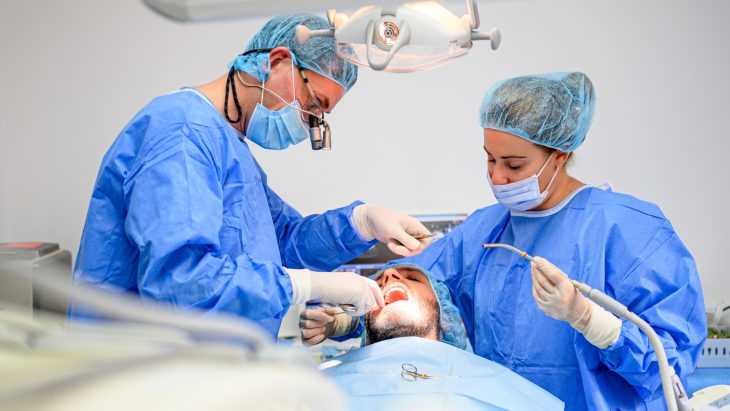
You arrive at the dental office or surgical center. The team reviews your records and confirms consent forms. Vital signs get checked. You settle into the chair and prepare for anesthesia.
Local anesthesia numbs the surgical area completely. Sedation helps you relax and stay calm. You remain aware but comfortable. Once numbness takes effect, the procedure begins.
You do not feel pain during surgery. You notice pressure, vibration, or movement.
Step One Gum Access
The dentist creates a small incision in the gum tissue. This step exposes the jawbone. Clean access allows precise implant placement while protecting surrounding tissue. Modern techniques focus on small incisions to reduce swelling and support faster healing.
Step Two: Bone Preparation
The dentist prepares the implant site using specialized drills. The process starts with a narrow opening and gradually widens to match the implant size. Each step follows strict depth and speed guidelines.
Cooling fluid keeps bone temperature controlled. Heat control matters because overheated bone affects healing. Careful preparation protects bone strength and stability.
Step Three: Implant Placement
The titanium implant is placed into the prepared site. The dentist secures the implant using controlled torque. Strong initial stability improves long term success.
The implant functions as an artificial tooth root. Titanium integrates with bone through osseointegration. This biological process anchors the implant firmly within the jaw.
Step Four: Healing Cap or Cover Screw
The dentist places a healing cap or cover screw on top of the implant. A healing cap sits above the gum line. A cover screw stays beneath the gum. Your treatment plan determines which option fits your case.
Both options protect the implant during healing.
Step Five Suturing
The gum tissue closes around the implant site. Sutures hold the tissue in place. Some sutures dissolve naturally. Others require removal after one to two weeks. Once sutured, the surgical phase ends.
Immediately After Surgery
You rest briefly before leaving the office. Numbness lasts several hours. Mild bleeding and swelling occur during the first day. These effects often peak within forty-eight hours.
Discomfort stays manageable for most patients. Prescribed or over-the-counter medication controls pain effectively. You receive written aftercare instructions. Following these instructions protects healing tissue and reduces complications.
The First 24 Hours
Rest supports recovery. Avoid physical exertion. Activity increases swelling and bleeding.
Ice packs help control swelling. Apply ice for short intervals throughout the day. Eat soft foods such as yogurt, eggs, soup, smoothies, and mashed vegetables. Avoid hot foods and drinks during the first day.
Do not rinse forcefully. Gentle saltwater rinses begin after twenty-four hours. Avoid smoking. Smoking restricts blood flow and interferes with bone healing.
Days Two Through Seven
Swelling decreases gradually. Bruising fades. Soreness improves each day.
You return to light daily activities. Continue eating soft foods and avoid chewing near the surgical site. Oral hygiene remains important. Brush carefully around the area. Antibacterial mouth rinse helps maintain cleanliness.
You attend follow-up visits as scheduled. The dentist checks the healing progress and removes sutures if required.
Osseointegration and Healing Phase
Osseointegration takes several weeks to several months. Bone cells grow and bond with the implant surface. This process creates a stable foundation for the final tooth.
Upper jaw implants often require more healing time due to softer bone. Lower jaw implants often integrate faster. During this phase, you live normally while avoiding hard chewing on the implant site.
Dental implants show success rates above ninety-five percent with proper care.
Second Stage Procedure When Needed
Some treatment plans include a minor second procedure. This visit exposes the implant if a cover screw was used. The dentist attaches a healing abutment. Healing usually takes about one week.
Final Abutment and Crown Placement
After healing completes, the restorative phase begins. The dentist attaches an abutment to the implant. This component connects the implant to the crown.
Impressions get taken. A dental lab fabricates a custom crown matching your natural teeth in shape and color. The final crown gets secured. Bite adjustments ensure comfort and balance.
Once placed, the implant functions like a natural tooth.
Long-Term Care After Implant Surgery
Daily care protects implant health. Brush twice daily. Clean between teeth using floss threaders or water flossers. These tools remove plaque around the implant and gums.
Routine dental visits remain essential. Professional cleanings help prevent gum inflammation around implants. Gum disease affects implants the same way it affects natural teeth.
With consistent care, dental implants last for decades.
When to Contact Your Dentist
Mild soreness, swelling, and pressure remain normal during early healing. Contact your dentist if pain increases after several days, swelling worsens suddenly, fever develops, or discharge appears. Early attention prevents complications.
Why Understanding the Process Matters
Knowledge changes the experience. You prepare with confidence. You manage recovery with realistic expectations. You protect healing tissue through daily habits. You recognize concerns early.
Dental implant surgery follows a clear and predictable path. Each step builds toward a stable and lasting tooth replacement. When you understand what to expect during and after surgery, you take an active role in your care and long-term success.
Source: Dr Sally Kashani – Hollywood Dentist